


 Fr
Fr
When evaluating commercial real estate, comparing a traditional office lease to a premium flexible workspace often looks like comparing apples to oranges. If a CFO only looks at the “monthly rent per square meter” of an empty concrete shell versus the fully serviced membership of a Workways hub, the traditional lease usually looks cheaper.
But in 2026, rent is just an illusion.
When you factor in the explosion of CapEx costs, hidden operational expenses, and the devastating financial drain of “shadow vacancy,” the math completely flips. According to global research, the traditional 10-year lease is no longer just a rigid commitment—it is a financial trap.
Here is why enterprise companies across Europe are shifting to flexible, intelligent infrastructure, and how to calculate your true Total Cost of Occupancy (TCO).
The CapEx Trap: What “Base Rent” Doesn’t Show You
A traditional lease is a blank canvas. While that sounds appealing to design teams, it is a nightmare for the balance sheet.
When you sign a standard commercial lease, you are absorbing massive upfront Capital Expenditure (CapEx). According to JLL’s recent Fit-Out Cost Guide, the cost of building out a traditional office has surged globally due to inflation, supply chain issues, and the necessity of installing modern IT and environmental sensors.
In a traditional lease, you are responsible for:
-
The Fit-Out (CapEx): Architecture, HVAC upgrades, wiring, and high-end tech installations (averaging €1,200 to €3,000 per employee upfront).
-
Hidden OpEx: Utilities, enterprise-grade Wi-Fi, daily cleaning, security, and facilities management.
-
Dilapidations (Exit Costs): At the end of your 5- or 10-year term, you are legally required to pay to tear it all down and return the space to a concrete shell.
At Workways, our fully-inclusive membership absorbs 100% of these costs. You move into a state-of-the-art, tech-enabled environment with zero upfront CapEx and zero exit fees.
The “Shadow Vacancy” Tax
Beyond CapEx, traditional leases suffer from a fatal flaw in the era of hybrid work: inflexibility.
CBRE and standard industry utilisation metrics show that average office attendance currently hovers between 50% and 60%. If you sign a rigid 5-year lease for 100 desks, but only 60 people are in the office on any given Tuesday, you are literally setting fire to 40% of your rent. This is known as “shadow vacancy.”
Flexible workspace eliminates this tax. You pay only for the exact footprint and headcount you need, with the agility to scale up or down as your business dictates. It is no surprise that JLL predicts 30% of all corporate commercial real estate portfolios will be flexible workspace by 2030.


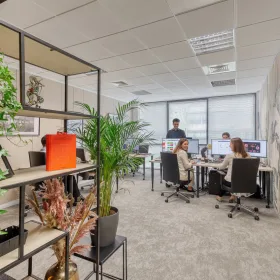
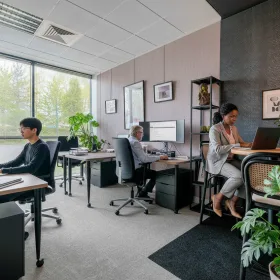
Regional Realities: Dublin, Paris, and Brussels
The shift toward flexible TCO is playing out uniquely across Europe’s major commercial hubs:
Dublin: Escaping the Scale-Up Lock-In
Dublin’s market is dominated by hyper-growth tech and pharma companies. Headcounts fluctuate rapidly. Signing a rigid 10-year lease in the Docklands drastically limits a company’s ability to scale gracefully. Workways hubs in Dublin offer the speed-to-market and agility that modern scale-ups require, without the €50k+ IT retrofit trap.
Paris: Bypassing ESG Infrastructure Costs
Paris operates under incredibly strict new environmental regulations (like the Décret Tertiaire), which force massive, expensive retrofits for energy efficiency on traditional tenants. By choosing Workways in Paris, companies bypass these heavy infrastructure costs entirely. We handle the ESG compliance and native CO2 telemetry; you just enjoy a premium CBD address.
Brussels: Solving the Hybrid Commuter Puzzle
Brussels is driven by a fierce commuter culture looking to avoid the Friday afternoon Ring Road traffic. As a result, many enterprise teams here have adopted aggressive Tuesday-Thursday in-office models. Paying for a traditional lease that sits empty on Mondays and Fridays is financial negligence. Workways Brussels Airport allows Brussels teams to optimize their spend for actual utilization.
Calculate Your True TCO
Stop guessing about the hidden costs of your next office move. Use our interactive calculator below to see how a Workways membership financially outperforms a traditional lease over a 3-year term.
Check The Savings Using Our Calculator
Ready to Optimise Your Balance Sheet?
The era of paying for empty concrete and fragmented data is over. Your real estate strategy should act as a force multiplier for your business, not a CapEx sinkhole.
If you are reviewing your real estate strategy for Q3/Q4, don’t rely on basic rent estimates.
Reach out to the Workways commercial team today. Bridget (Belgard, Dublin) Juliette (Zaventem, Brussels) Sandra (Val d’Europe, Paris)
We will build a comprehensive, custom Total Cost of Occupancy calculation based on your exact headcount, growth projections, and chosen city to show you exactly how much capital you can free up by going flex.
The Calculator
Workways vs. Traditional TCO
Adjust the settings to see your savings.
Base Rent
Hidden OpEx (Utilities, IT)
CapEx (Fit-out, Furniture)
Exit Costs (Dilapidations)
Workways All-Inclusive
€0
€0
